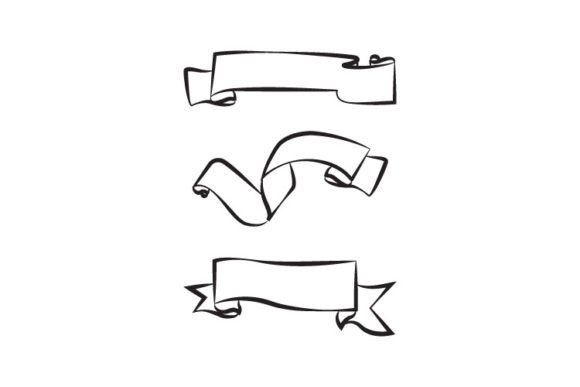
Mastering the Art of Elegance: A Comprehensive Guide to Scrolling Ribbon Banner Clipart Outline Design
In the intricate world of graphic design, few elements are as timeless and versatile as the ribbon. Whether it signifies victory on a podium, adds a touch of luxury to a wedding invitation, or serves as a dynamic header for a digital newsletter, the ribbon is a universal symbol of celebration and structure. However, when designers seek to incorporate this classic motif without the visual clutter of solid colors, they turn to a specific and highly effective resource: the scrolling ribbon banner clipart outline. This article explores the nuances of these vector designs, their practical applications, and why mastering them is essential for both novice creators and seasoned professionals.
Understanding the Scrolling Ribbon Banner Outline
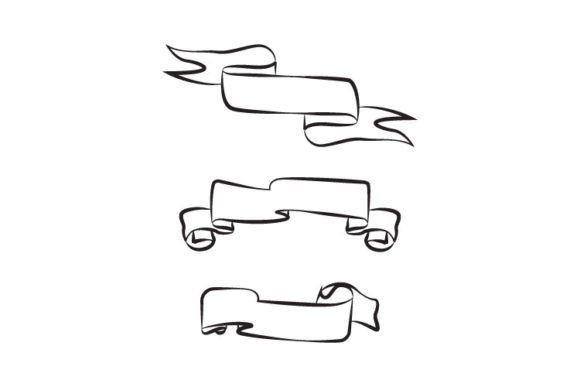
To truly appreciate the value of a scrolling ribbon banner clipart outline, one must first understand what distinguishes it from other forms of ribbon graphics. Unlike filled vector shapes that rely on gradients and shadows to create depth, an outline design focuses purely on line weight, contour, and negative space. This minimalist approach offers several distinct advantages in modern design workflows.
The Power of Negative Space
An outline-based ribbon allows the background to become part of the design. This is particularly useful when working with textured backgrounds, busy patterns, or vibrant color schemes where a solid block of ink might obscure important details. By using a simple stroke, the designer creates a frame that guides the eye without competing with the content within or behind it.
Scalability and Precision
Because these assets are typically provided in vector formats, they maintain their crispness at any size. You can scale a scrolling ribbon banner up for a large billboard or down for a favicon, and the lines will remain sharp. This scalability is crucial for maintaining brand consistency across various media platforms.
The Practical Applications of Vector Ribbon Designs
The versatility of a scrolling ribbon banner clipart outline drawing design vector extends far beyond simple decoration. Its utility spans multiple industries, including print media, event planning, education, and digital marketing. Let us explore how these elements fit into daily activities and professional projects.
Print and Editorial Design
In the realm of print, outlines are often preferred for their clean aesthetic. Consider a high-end bakery designing a menu. A delicate, hand-drawn style ribbon outline can frame the price list, adding a sense of artisanal quality without overwhelming the text. Similarly, in educational materials, teachers can use these outlines to highlight key terms or separate sections of a worksheet, helping students visually parse information more easily.
Digital Branding and Web Design
For web designers, SVG (Scalable Vector Graphics) files are gold. An animated scrolling ribbon can be coded into a website header using CSS or JavaScript, creating a subtle motion effect that draws attention to a "Sale" or "New Arrival" message. Because the file is an outline, it loads quickly and remains legible on all screen resolutions. Furthermore, in logo design, an outline ribbon can serve as a foundational element that can be recolored to match seasonal branding campaigns without needing to redraw the core shape.
Event Invitations and Stationery
No discussion of ribbons is complete without mentioning invitations. For weddings, galas, or corporate awards ceremonies, a scrolling ribbon banner outline provides a sophisticated container for names, dates, and venues. When printed on heavy cardstock, the thin lines of the outline create a striking contrast against the texture of the paper, elevating the perceived value of the physical item.
Why Vector Formats Are Essential for Designers
When sourcing or creating these designs, the file format is just as critical as the visual style. The comprehensive package you receive—typically including Ai, Eps, Png, Jpg, and Svg—ensures compatibility across different software ecosystems. Understanding the role of each format empowers you to choose the right tool for the job.
- Adobe Illustrator (.Ai): This is the native source file for many vector designs. It retains all editable layers, anchor points, and paths, allowing you to modify the curvature of the scroll or adjust the line thickness directly within Adobe Illustrator.
- Encapsulated PostScript (.Eps): A legacy but robust format that ensures compatibility across almost all vector graphics programs, including CorelDRAW and Inkscape. It is ideal for sending files to professional printing services that may not use Adobe software.
- Portable Network Graphics (.Png): While raster-based, PNGs support transparency. This makes them perfect for quick mockups or placing over colored backgrounds in non-vector software like Microsoft PowerPoint or Canva.
- Joint Photographic Experts Group (.Jpg): Useful for low-resolution previews or embedding in documents where transparency is not required. Note that JPGs do not support transparency, so white backgrounds are usually baked in.
- Scalable Vector Graphics (.Svg): The king of web design. SVGs are XML-based vectors that can be manipulated via code. They are infinitely scalable and accessible, making them the best choice for responsive websites and interactive applications.
Common Misunderstandings About Outline Design
Despite their simplicity, there are common misconceptions regarding the use of outline clipart. One prevalent assumption is that outlines are "less finished" than filled designs. In reality, a well-crafted outline requires precise control over bezier curves and line weights. A poorly executed filled shape can look muddy, whereas a clean outline exudes confidence and clarity.
Another misunderstanding involves the difficulty of customization. Many beginners believe that editing vector outlines requires advanced coding skills. However, most vector editors offer intuitive tools for manipulating nodes and strokes. With a standard set of files, you can experiment with changing the stroke width, applying dashed lines, or even converting the outline into a fill pattern to create unique textures.
Building a Cohesive Design System
To maximize the impact of your element design and background work, consider integrating the scrolling ribbon banner into a broader design system. Consistency is key to professional presentation. If you use a specific line weight for your ribbon outlines, try to mirror that weight in your typography or other graphical elements.
For example, if your ribbon outline uses a 2pt stroke, your headings might also feature a 2pt underline or border. This creates a visual rhythm that ties the composition together. Additionally, experimenting with monochromatic palettes can enhance the elegance of outline designs. Instead of black outlines, try deep navy, charcoal gray, or even metallic gold for premium prints.
Conclusion: Elevate Your Creativity with Versatile Assets
The scrolling ribbon banner clipart outline is more than just a decorative flourish; it is a fundamental building block of elegant design. By leveraging the flexibility of vector formats like Ai, Eps, and Svg, designers can create scalable, adaptable, and visually striking compositions for print, web, and digital media. Whether you are crafting a personal invitation, designing a corporate identity, or developing educational content, understanding the power of these outline drawings allows you to communicate with clarity and sophistication. Embrace the simplicity of the outline, and discover how much depth and character it can add to your creative projects.