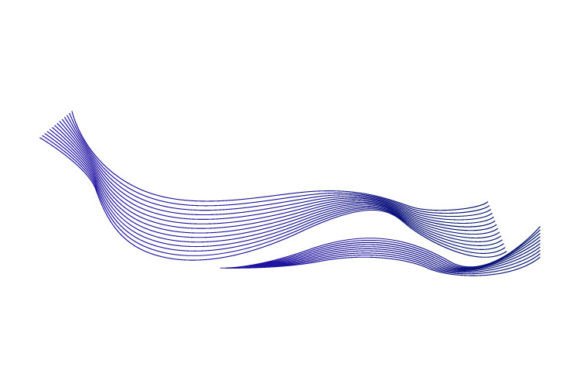
The Power of Motion in Stillness: Mastering Blue Dynamic Lines Design Vectors for Creative Projects
In the fast-paced world of digital design, capturing attention is often a matter of milliseconds. When a viewer scrolls past a website or glances at a printed brochure, their eye is naturally drawn to movement. This is where the blue dynamic lines design vector becomes an indispensable asset. These graphical elements are not merely decorative; they are visual cues that guide the human eye, suggest speed, and evoke a sense of technological sophistication. Whether you are a seasoned graphic designer looking to enhance a corporate identity or a small business owner aiming to create impactful marketing materials, understanding how to utilize these dynamic assets can significantly elevate your creative output.
At its core, a dynamic line design is about conveying energy without the need for complex imagery. By using abstract, flowing curves and sharp angles in shades of blue, designers can simulate motion, data flow, or connectivity. This article explores the significance of these vectors, their practical applications across various industries, and why having access to multiple file formats like Ai, Eps, Png, Jpg, and Svg is crucial for professional workflow efficiency.
Understanding the Aesthetics of Blue Dynamic Lines
To truly appreciate the value of a blue dynamic lines design vector, one must first understand the psychology behind the color blue and the geometry of motion. Blue is universally associated with trust, stability, intelligence, and calmness. In the context of technology and business, it is the dominant color choice because it reassures users while suggesting innovation. When this psychological weight is combined with the visual language of "dynamic lines," the result is a powerful communication tool.
Dynamic lines are characterized by their directionality. Unlike static horizontal or vertical lines that anchor a design, dynamic lines sweep across a composition. They can be:
- Flowing and Curvilinear: These suggest organic growth, fluidity, and ease. They are perfect for healthcare, wellness, or lifestyle brands that want to appear approachable yet modern.
- Angular and Geometric: Sharp, zigzagging, or straight diagonal lines convey precision, speed, and forward momentum. These are ideal for fintech, logistics, or software development companies.
When these lines are rendered as vectors, they maintain their crispness regardless of scale. This scalability is what makes them superior to raster images for background elements and large-format printing.
Why Vector Formats Are Essential for Professional Design
The files you will get—Ai, Eps, Png, Jpg, and Svg—represent the complete toolkit needed for any serious design project. Each format serves a specific purpose in the production pipeline, and understanding when to use which is key to achieving high-quality results.
The Native Source Files: Ai and Eps
The Adobe Illustrator (Ai) and Encapsulated PostScript (Eps) files are the heart of your design resource. These are editable vector formats, meaning you can manipulate individual nodes, change colors, adjust stroke weights, and ungroup elements without losing quality. If you are designing a custom logo or need to integrate the dynamic lines into a larger illustration, these files are non-negotiable. They allow for infinite customization, ensuring that the blue hues match your brand guidelines perfectly.
Web-Ready and Scalable: Svg
In the era of responsive web design, the Scalable Vector Graphics (Svg) format has become paramount. An Svg file allows the dynamic lines to scale infinitely on screens of any resolution, from mobile phones to 4K monitors, without pixelation. Furthermore, Svg files are lightweight, which helps improve website loading speeds—a critical factor for SEO and user experience. Using an Svg for a website header background ensures that your site looks crisp on all devices while maintaining performance.
Raster Options for Quick Use: Png and Jpg
While vectors offer flexibility, there are times when you need a quick, ready-to-use image. The Png (Portable Network Graphics) and Jpg (Joint Photographic Experts Group) files serve this purpose. Png files support transparency, making them ideal for overlaying dynamic lines onto photos or other backgrounds without a white box surrounding them. Jpg files, though compressed and lacking transparency, are universally compatible and useful for simple previews or low-resolution drafts. Having these pre-rendered options saves time when deadlines are tight.
Practical Applications in Modern Business and Creativity
The versatility of blue dynamic lines design vectors extends far beyond simple decoration. They play a functional role in guiding user interaction and reinforcing brand messaging. Here is how they fit into various aspects of modern life and work.
Digital Interfaces and User Experience (UX)
In UI/UX design, visual hierarchy is everything. Dynamic lines can act as invisible arrows, leading the user’s eye toward call-to-action buttons or important information. For example, a banking app might use subtle blue sweeping lines in the background to suggest the smooth transfer of money. This subconscious cue enhances the feeling of reliability and ease. Because these elements are vectors, they can be easily resized to fit different screen breakpoints, ensuring a consistent experience across platforms.
Corporate Identity and Branding
For businesses in the tech, telecommunications, or consulting sectors, a strong brand identity is vital. A blue dynamic lines design vector can serve as a foundational pattern for business cards, letterheads, and presentation slides. It adds a layer of professionalism and modernity that static solid colors cannot achieve. Imagine a PowerPoint presentation where each slide transitions with a flowing blue line animation (created from the vector source); it creates a cohesive narrative that keeps the audience engaged.
Print Media and Large Format Decoration
One of the most significant advantages of vector graphics is their ability to be scaled up for print without losing resolution. This makes them perfect for large-format printing such as banners, trade show backdrops, and vehicle wraps. A blue dynamic lines design vector for print can turn a plain wall into an immersive environment. In retail spaces, these designs can be used to create eye-catching displays that draw customers in. The high contrast and clean lines remain sharp even when blown up to several meters wide, ensuring that the brand message is clear and impactful.
Element Design for Social Media and Marketing
Social media feeds are crowded and competitive. To stand out, content needs to be visually striking. Dynamic lines can be used as frames, dividers, or accent elements in Instagram posts, LinkedIn articles, and Facebook ads. They break up text-heavy content and add a touch of elegance. For instance, a tech blog post could use thin blue lines to separate sections, improving readability while adding a modern aesthetic. The availability of both transparent Pngs and editable Ai files allows marketers to adapt these elements quickly for different campaign themes.
Common Misconceptions About Abstract Design
Despite their popularity, there are some misunderstandings about the use of abstract elements like dynamic lines. One common assumption is that they are too generic or overused. While it is true that blue lines are a staple in corporate design, the key lies in execution. A well-crafted vector set offers unique variations in thickness, opacity, and curvature that prevent the design from looking stale. Another misconception is that vectors are only for "tech" companies. In reality, dynamic lines can represent energy in sports branding, flow in water conservation campaigns, or connectivity in educational materials. The symbolism is adaptable, provided the designer understands the context.
Maximizing Value Through Versatility
The true value of acquiring a package containing Ai, Eps, Png, Jpg, and Svg files lies in the flexibility it provides throughout the product lifecycle. You might start with the Ai file to create a custom logo variation. Then, you export an Svg version for your website’s hero section. Later, you might use a Png overlay for a social media campaign, and finally, send the high-resolution Eps file to a printer for a large banner. This seamless transition between digital and physical mediums ensures consistency and saves valuable time.
Furthermore, these resources encourage experimentation. Because the files are editable, designers can swap out the blue for a different brand color, merge multiple line patterns, or animate them for video content. This encourages creativity and allows brands to evolve their visual language over time without starting from scratch.
Conclusion
In conclusion, the blue dynamic lines design vector is more than just a pretty picture; it is a strategic design element that bridges the gap between aesthetics and function. By leveraging the properties of blue and the energy of motion, designers can create compelling visuals that resonate with audiences across digital and print platforms. With access to a comprehensive suite of file formats including Ai, Eps, Png, Jpg, and Svg, professionals have the tools necessary to execute these designs with precision and versatility. Whether you are building a brand identity, enhancing a user interface, or decorating a physical space, incorporating these dynamic elements will add a layer of sophistication and clarity to your work. Embrace the power of motion in stillness, and let your designs speak with velocity and vision.