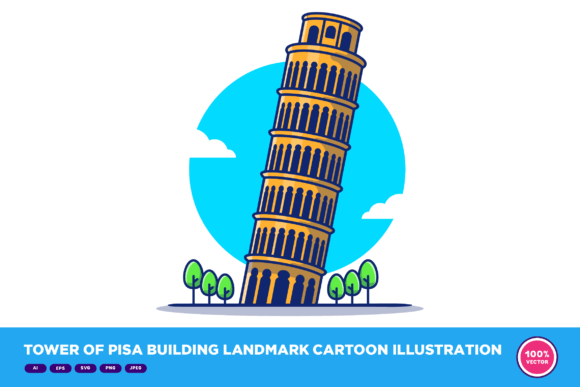
Tower of Pisa Building Landmark Cartoon: A Versatile Design Asset for Creative Projects
The Tower of Pisa, one of the world’s most iconic architectural landmarks, has long been a symbol of Italy and a favorite subject in travel, tourism, and design contexts. When rendered as a cartoon illustration, this famous leaning tower takes on a new dimension—transforming from a historical monument into a stylized, approachable, and adaptable visual asset. The Tower of Pisa Building Landmark Cartoon is more than just an image; it's a premium vector illustration that blends artistic charm with technical precision, making it ideal for a wide range of creative endeavors.
What Is the Tower of Pisa Building Landmark Cartoon?
The Tower of Pisa Building Landmark Cartoon is a digital illustration capturing the essence of the Leaning Tower in a flat, cartoon style. This version simplifies the structure while maintaining recognizable features like its bell chamber, white marble façade, and the signature tilt. Unlike traditional photographs or complex 3D renderings, this cartoon format strips away realism to focus on clarity and visual appeal, especially for branding, merchandise, and editorial content.
Such illustrations are often used by designers to evoke a sense of nostalgia, whimsy, or cultural relevance without overwhelming viewers with intricate details. They serve as effective visual shorthand, allowing audiences to quickly connect with the subject matter—especially when representing travel destinations, educational themes, or lifestyle products.
Key Features and Benefits of the Vector Illustration
This cartoon vector illustration comes with several notable attributes that enhance its usability across different platforms and applications:
- Vector Format (AI, EPS, SVG): Being a vector file ensures scalability without loss of quality. Whether you're printing a large billboard or designing a small icon, the Tower of Pisa remains crisp and clear.
- Easily Editable Colors: The use of distinct layers allows for seamless color customization. This makes it perfect for aligning with brand palettes or seasonal themes.
- Transparent Backgrounds (PNG, JPEG): These formats provide flexibility for overlaying the cartoon onto various backgrounds, enhancing its integration into web graphics, app interfaces, and print materials.
- Well-Organized Layers: This is a major plus for professional designers who may need to adjust individual components of the illustration, such as the tower base or surrounding elements.
- High Quality and Resolution: Ensures the image looks sharp on any medium, from high-resolution screens to physical products like mugs and stickers.
These features collectively make the Tower of Pisa Building Landmark Cartoon a powerful tool for anyone needing a clean, charming, and customizable representation of the landmark for commercial or personal use.
Real-World Applications and Use Cases
One of the strengths of this illustration lies in its adaptability. Here are some common scenarios where it can be effectively deployed:
- Merchandise Design: Use the cartoon to create fun and appealing travel-themed shirts, tote bags, keychains, and other souvenirs. Its playful aesthetic resonates well with tourists and fans of Italian culture.
- Editorial Content: Bloggers, educators, and publishers can incorporate the Tower of Pisa cartoon into infographics, travel guides, or children's books to add visual interest without distracting from the message.
- Digital Media: Marketers and social media creators can leverage the illustration for website headers, app icons, email templates, or YouTube thumbnails related to travel, architecture, or European heritage.
- Print Materials: It works exceptionally well in posters, postcards, greeting cards, and brochures—especially those targeting a family-friendly or casual audience.
In each case, the illustration’s flat design and vibrant colors help maintain visual consistency, while its simplicity ensures quick recognition. For instance, using the Tower of Pisa cartoon on a line of travel mugs would not only attract attention but also clearly communicate the theme to potential buyers.
Quality and Usability Considerations
From a professional standpoint, the quality of the Tower of Pisa Building Landmark Cartoon stands out due to its clean lines, balanced proportions, and accurate portrayal of the landmark’s defining characteristics. While it’s simplified, the illustration retains enough detail to feel authentic and respectful of the original structure.
Usability is another strong point. The inclusion of multiple file formats means it can be used across different software and platforms without compatibility issues. Adobe Illustrator users will appreciate the AI and EPS files for editing, while those working in web design might prefer the PNG or SVG versions for responsive layouts. The transparent background adds further value, enabling easy placement within compositions.
However, the effectiveness of the illustration depends heavily on context. In situations requiring a highly realistic depiction of the Tower of Pisa, such as architectural presentations or academic publications, this cartoon style may not suffice. But for marketing campaigns, lifestyle branding, and casual educational content, it excels.
Who Can Benefit Most from This Illustration?
Professionals across various industries can find value in this design asset. Entrepreneurs launching a travel-related product line, such as luggage tags or passport covers, could use it to instantly convey an Italian destination. Educators might include it in geography lessons or history presentations about medieval architecture. Freelance designers and illustrators can integrate it into client projects that call for a lighthearted yet culturally rich visual element.
Marketers aiming to promote Italy as a tourist hotspot will benefit from the illustration’s ability to capture attention with minimal effort. Similarly, bloggers and content creators in the travel niche can use it to enhance their posts with engaging visuals that resonate with readers. Small business owners selling custom-printed items like T-shirts, stickers, or phone cases will appreciate the flexibility and high-quality output it provides.
Strengths and Limitations
Among the primary strengths of the Tower of Pisa Building Landmark Cartoon is its versatility. The flat cartoon style ensures it pairs well with modern UI/UX trends, and its ready-to-use nature minimizes time spent on adjustments. Additionally, the illustration’s isolated presentation allows it to stand out without visual clutter, which is essential for branding and advertising purposes.
Despite these advantages, there are limitations to consider. The cartoon format does not replicate the grandeur or complexity of the real Tower of Pisa, which may not meet the expectations of audiences looking for photorealistic imagery. Furthermore, while the illustration is suitable for most non-technical uses, it lacks the depth and texture found in more detailed artwork, potentially limiting its application in luxury branding or high-end packaging.
Design Consistency and Long-Term Value
Consistency in design is crucial for building brand identity, and the Tower of Pisa cartoon offers a uniform visual language that can be reused across multiple platforms. Whether applied to a logo, promotional material, or a merchandise collection, the illustration maintains its core look, helping to reinforce a cohesive message.
Long-term value is also significant. As a vector-based asset, it remains future-proof against changes in display technology or print standards. Moreover, its timeless style avoids the pitfalls of trendy designs that may become obsolete. The ability to modify colors and scale sizes ensures it can evolve alongside your project needs without requiring repeated purchases or redesigns.
Practical Recommendations for Users
To get the most out of the Tower of Pisa Building Landmark Cartoon, consider the following best practices:
- Use appropriate file formats: Choose SVG or PNG for web-based projects and AI/EPS for print or graphic editing. Always verify resolution requirements before finalizing output.
- Pair with complementary visuals: Combine the cartoon with other European landmarks or travel-related icons to create themed collections or series.
- Test color variations: Since it's easily editable, experiment with different color schemes to see what aligns best with your target audience and brand identity.
- Consider licensing: If planning to sell products featuring the illustration, ensure proper licensing is obtained to avoid legal complications.
For example, a stationery company promoting a “Europe Through Art” product line might pair the Tower of Pisa cartoon with similar illustrations of Big Ben or the Eiffel Tower, creating a visually harmonious set that appeals to travelers and art lovers alike.
Conclusion and Final Thoughts
The Tower of Pisa Building Landmark Cartoon is a practical and aesthetically pleasing design asset that bridges the gap between cultural symbolism and modern creativity. Its combination of technical quality and artistic appeal makes it a valuable addition to any designer’s toolkit. While it may not replace high-resolution photography or detailed 3D models, it serves a unique role in branding, merchandising, and editorial design.
If your project involves travel themes, educational content, or casual branding, this cartoon illustration could be an excellent fit. However, if your work requires architectural accuracy or a more sophisticated visual style, you may need to explore alternative representations. Ultimately, the Tower of Pisa cartoon is a reliable and flexible choice for professionals and hobbyists seeking to bring a touch of European charm to their creations.